

POC in Luxury Spaces
The difference between consuming luxury and being perceived as belonging within it

I keep thinking about this post from Yoon Ahn who I’m heavily influenced by and always admire:
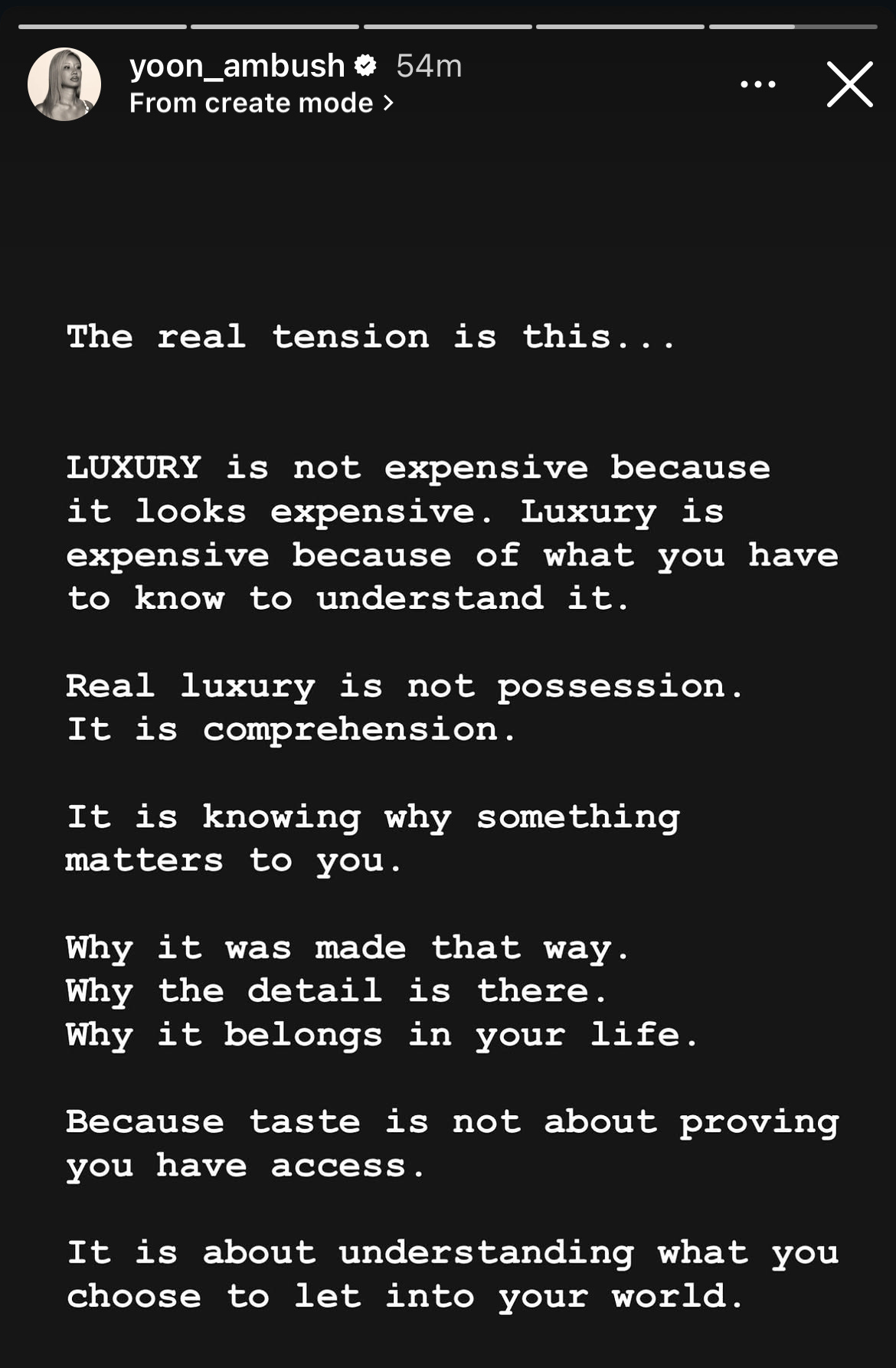
Perhaps it’s Saturn and Neptune in Aries, but I’ve been thinking about identity and culture a lot recently. Then again, I’m always thinking about it—that’s what happens when you have a lot of cardinal placements (Aries, Cancer, Capricorn, Libra).
In last week’s article, I mentioned that today’s Outer World post would be about the MET Gala—I know it’s over and the news cycle has moved on, but I’ve still been thinking about the wider cultural conversation around luxury.
Side note: sometimes I question whether merging all of my interests under one blog makes sense, since some people may only want astrology content. But to subscribe to me is to know I am multi-disciplinary and multi-faceted. Besides, I see everything through the lens of astrology anyway lol.
The MET Gala triggered this thought about POC in luxury or ‘elite’ spaces, and the difference between consuming luxury vs being seen as belonging within it.
It’s always strange to me when people act as though POC don’t ‘belong’ in luxury spaces or can’t embody luxury. Historically, who do you think built, influenced, and occupied these spaces in the first place? Food for thought.
Indians dominated the MET and I’m so glad to see it.
You may not agree, but you also likely didn’t even realise the extent of South Asian representation on the carpet because mainstream coverage barely highlighted it. [I’ve added all my favourite looks at the end of this piece].
I’ve mentioned this in previous articles, but when I think of India, I think of craftsmanship, first and foremost. I loved seeing Indian designers show up on the carpet—a carpet by the way, created by an Indian design house based in Kerala (this is the fourth time Neytt have designed the MET carpet). I’m stating these things because it’s important to give people their flowers, especially as Western media continues to overlook Indian/South Asian representation at events like this.
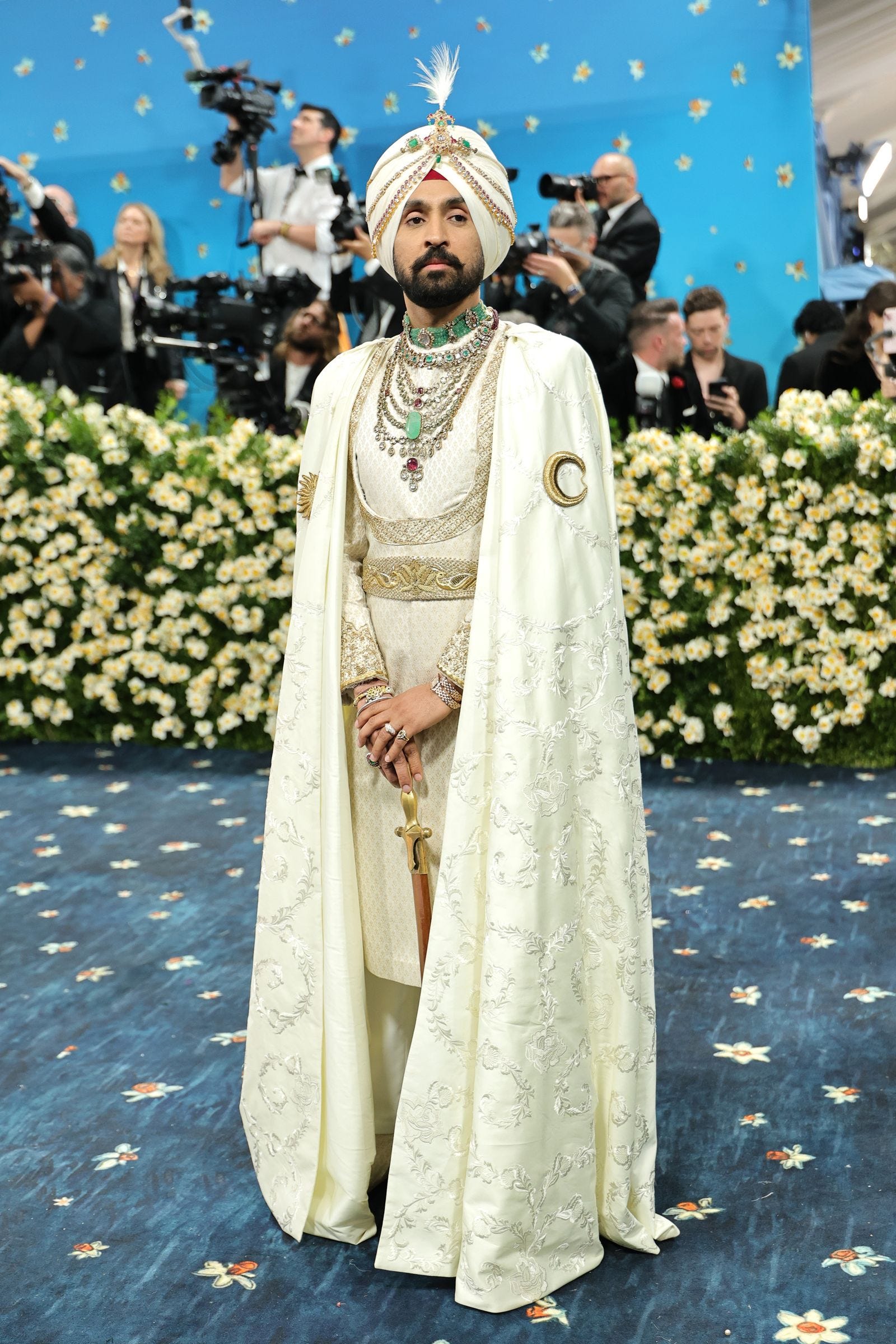
Think back to last year, when reporters didn’t know who Shah Rukh Khan was—arguably the biggest actor in Bollywood and one of the most recognisable figures in India. Or when Diljit Dosanjh (you may recognise him from his Jimmy Fallon appearance) was cut from the livestream and ignored on the carpet when making his entry. The historical and cultural significance behind his outfit is not something I’d expect everyone to get, but how can you ignore this custom Prabul Gurung?!
And don’t even get me started on the Cartier-Emma Chamberlain drama.
Although that actually ties in perfectly with the point of this article.
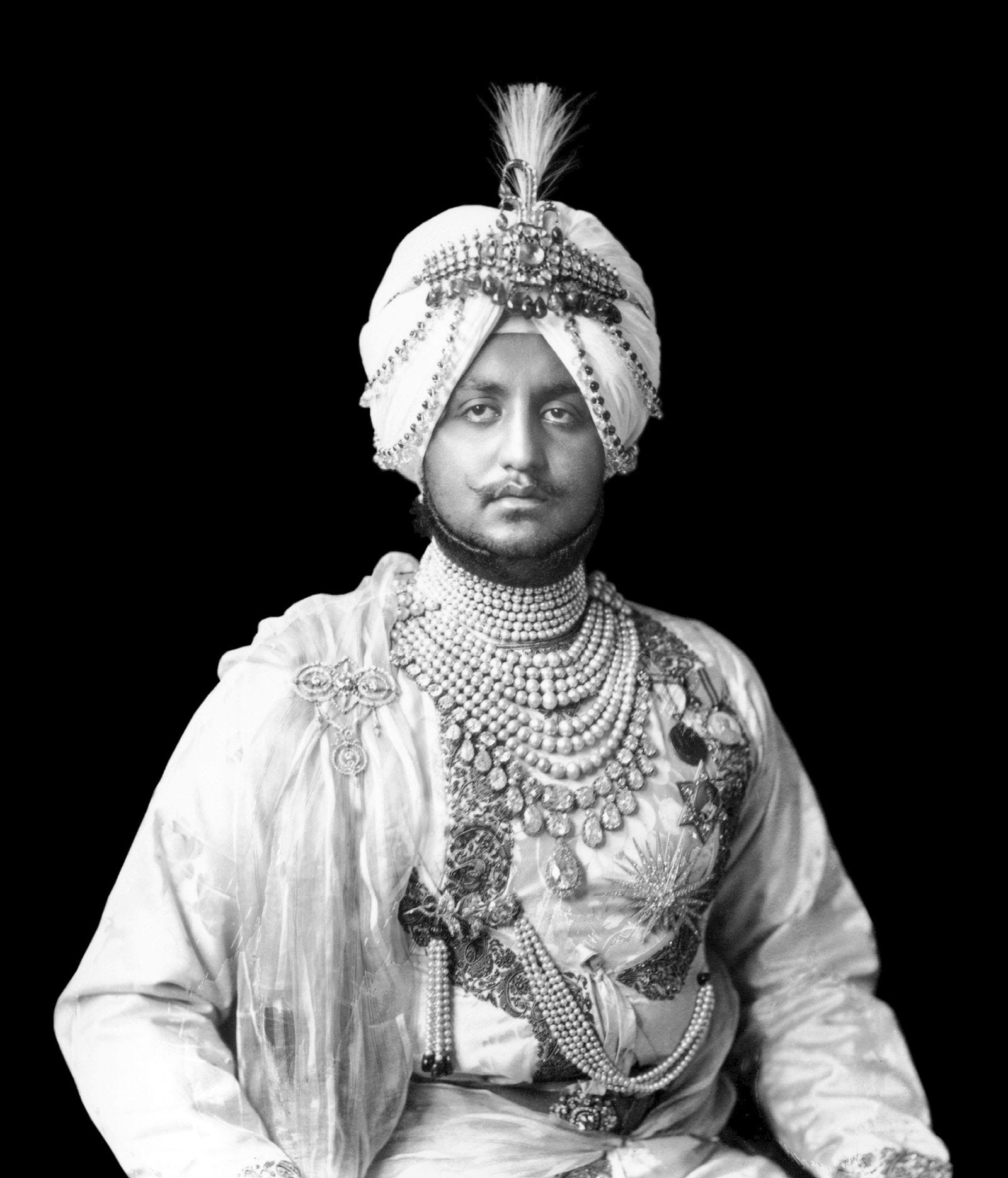
For those of you who don’t know the backstory—Cartier refused to let Diljit wear the Patiala Necklace to the 2025 MET Gala. This necklace was commissioned in 1925 by Maharaja Bhupinder Singh of Patiala—yes, the same Maharaja that was the inspiration behind Diljit’s look.
It was the largest single order ever placed with Cartier to date, created in 1928. It contained 2,930 diamonds, including as its centrepiece, the world's seventh-largest diamond at the time, the ‘De Beers’, as well as Burmese rubies.
Yet in 2022, Cartier allowed 20-year-old YouTuber, Emma Chamberlain, to wear part of the necklace because she was a brand ambassador. Make it make sense. No cultural ties, no representation. The historical significance lost. Cartier had an opportunity with Diljit to showcase the necklace in it’s authentic glory, particularly because of the inspiration and meaning behind Diljit’s outfit.
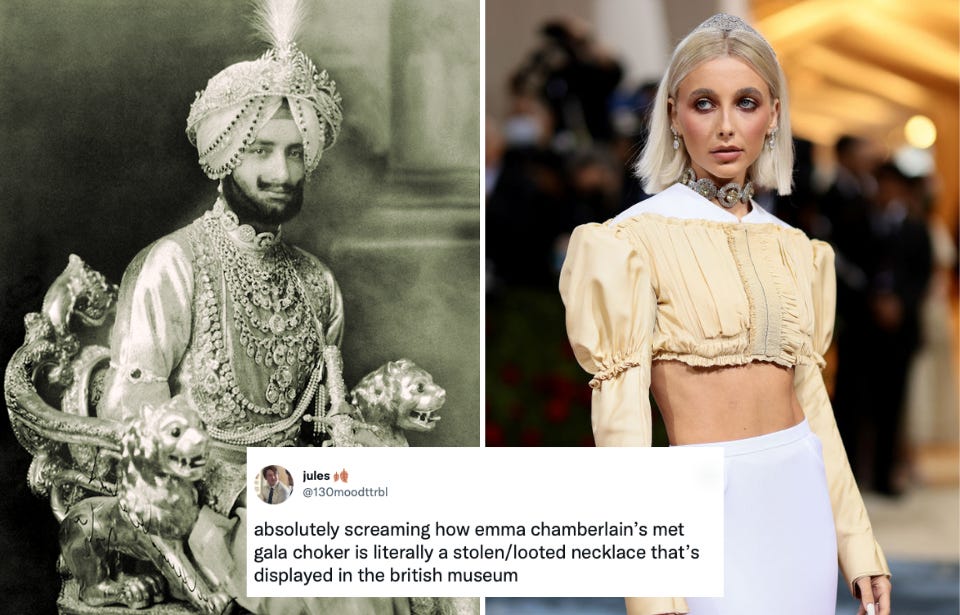
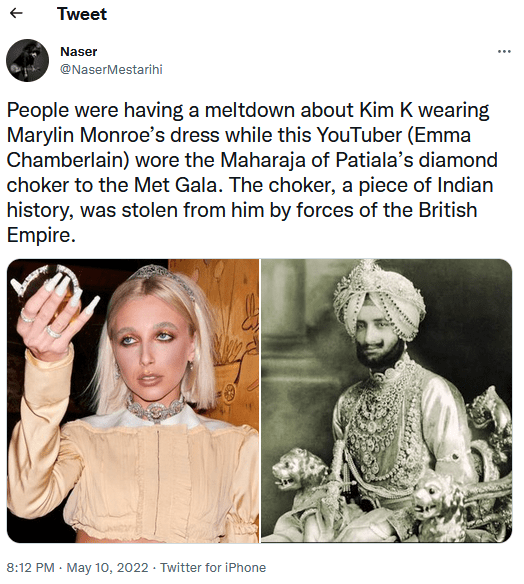
And its not about Emma, it’s about Cartier deciding who can wear it based on perception—a luxury fashion statement when worn by Emma, but Diljit is not deemed worthy of the same legitimacy. The irony is crazy: Cartier gatekeeping a cultural artefact from the very same culture that commissioned it.
But the even bigger irony here is POC being treated as ‘new’ to spaces they materially and culturally helped shape.
A lot of people talk about representation on the surface, but the more interesting question is why certain groups became seen as the ‘default’ image of luxury in the first place? Because historically, luxury industries were built through colonised resources and non-Western craftsmanship & inspiration from Asia, Africa, the Middle East, etc.
So ultimately, this conversation is about perception and who society subconsciously believes is allowed to embody exclusivity, beauty, wealth, taste, or status.
Because when people talk about ‘POC in luxury spaces’, there’s already a hidden implication—that luxury is a space POC are entering into, rather than something they’ve always been involved with historically and culturally.
A POC celeb can wear couture, attend elite events like the MET, generate billions in cultural influence, and still be framed as: ‘breaking barriers’ or ‘taking up space’…in ways their white counterparts aren’t.
Why? Because ‘whiteness’ is positioned as the default within many luxury institutions. Everyone else becomes ‘representation’, even when they’re shaping culture more actively. So when POC take up space confidently in those environments, some people will find it jarring, or subconsciously view it as disruption rather than belonging.
And then there’s the idea that luxury is only aspirational because it signals distance from labour. But as we know, many immigrant and POC communities have relationships to labour, sacrifice, migration, and struggle. So when someone from those backgrounds embodies the opposite—ease, softness, leisure, beauty, or wealth—publicly, it can psychologically challenge narratives that people have internalised about who is ‘supposed’ to occupy those identities or traits.
Especially for South Asians. Indian culture has rich traditions around textiles and craftsmanship. Yet Western media still frames Indians as the ‘nerdy’ stereotype who doesn’t know how to dress, rather than the luxurious or aesthetically aspirational.
So I guess this is the politics of aesthetics—why confidence in luxury spaces from POC can make some people uncomfortable.
Anyway, here are some of the MET Gala looks from Indian talent that I wanted to highlight—enjoy!
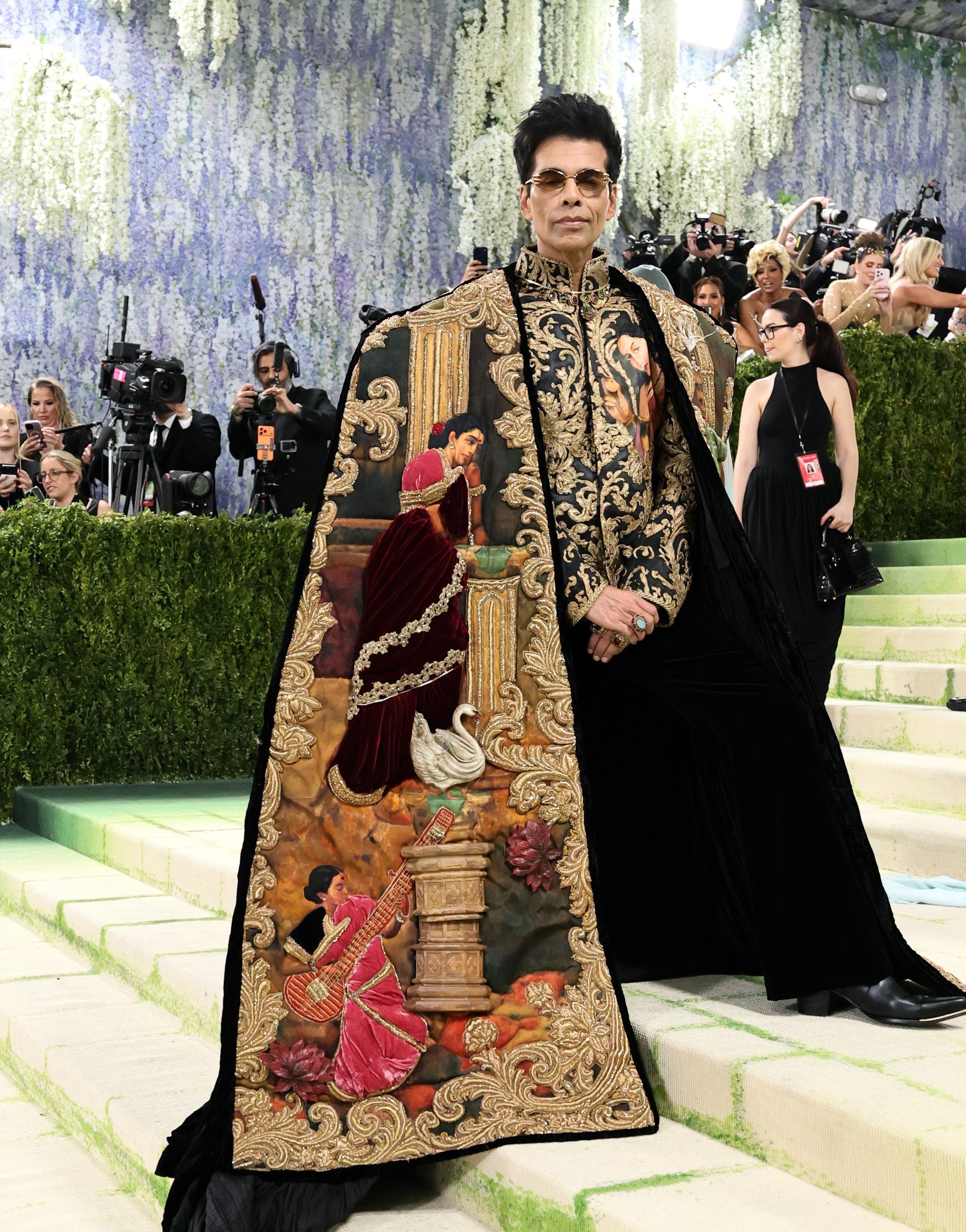
KARAN JOHAR:
Wearing Manish Malhotra, styled by Eka Lakhani—inspired by Raja Ravi Varma’s paintings. The look was entirely hand-painted by a team of artisans who spent 5,600 hours over 86 days bringing it to life.
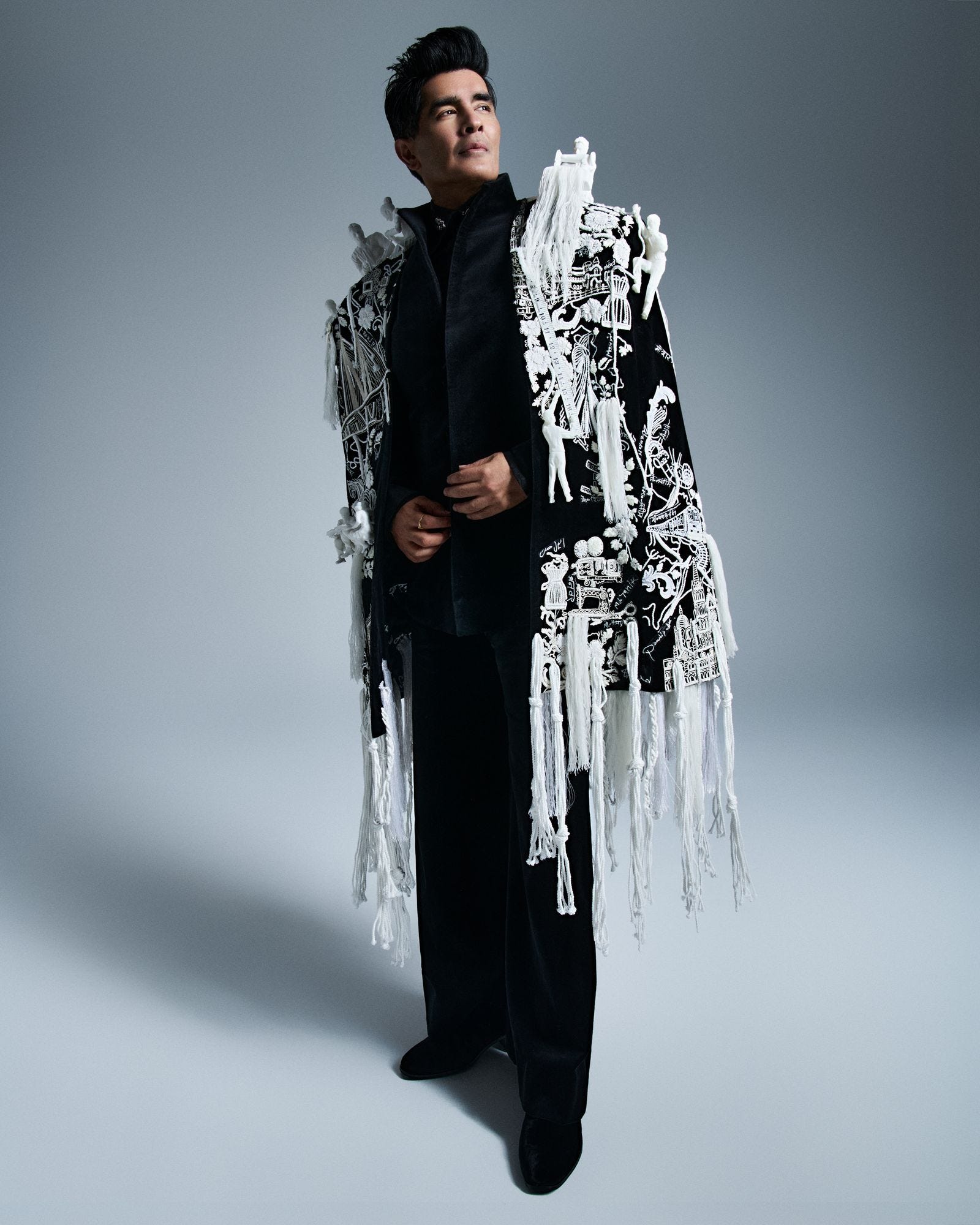
MANISH MALHOTRA
The designer himself. Not only did he dress several celebrities, he walked the carpet in his own piece—a living narrative of Mumbai. He wore a black Indian bandhgala layered with an architectural cape as a visual tribute to Mumbai and his atelier, taking over 960 hours and 50 artisans to complete. Woven into the embroidery are the actual names and signatures of his team. The cape features 3D sculptures of embroiderers at work, as well as Mumbai's landmarks.
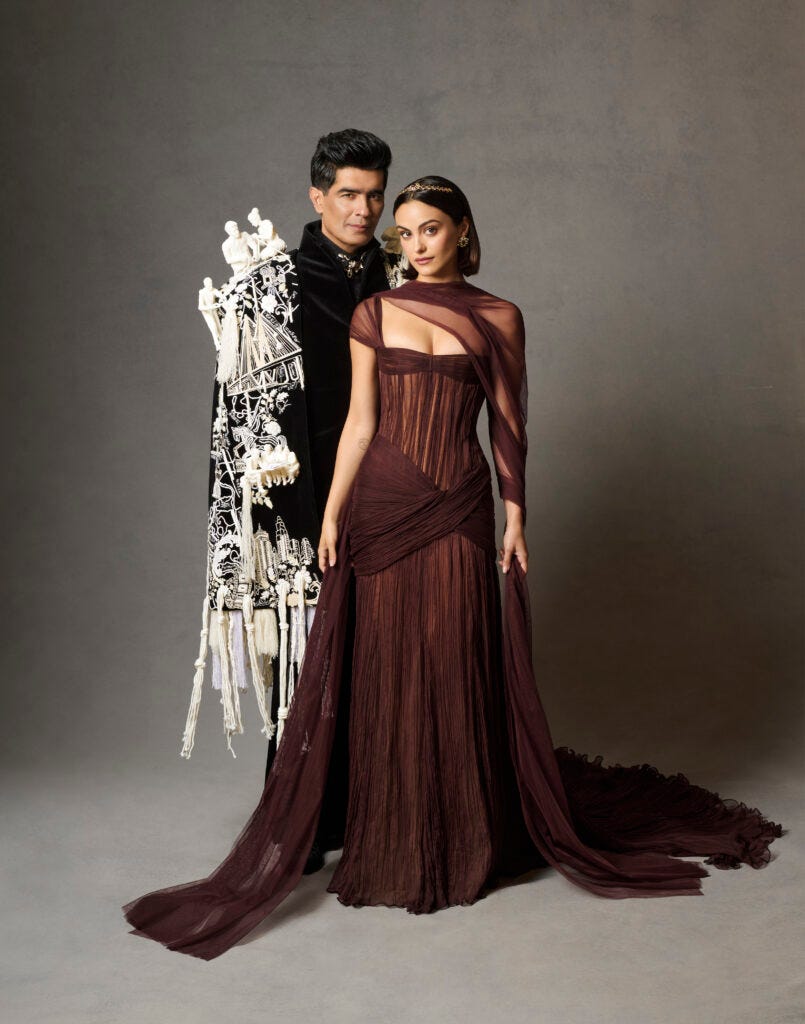
CAMILA MENDES
Dressed by Manish Malhotra, inspired by the women depicted in Amrita Sher-Gil’s paintings. If you’re an OG here, you may remember spotting her ‘Village Scene’ painting in my Friday 13th article.
ANANYA BIRLA
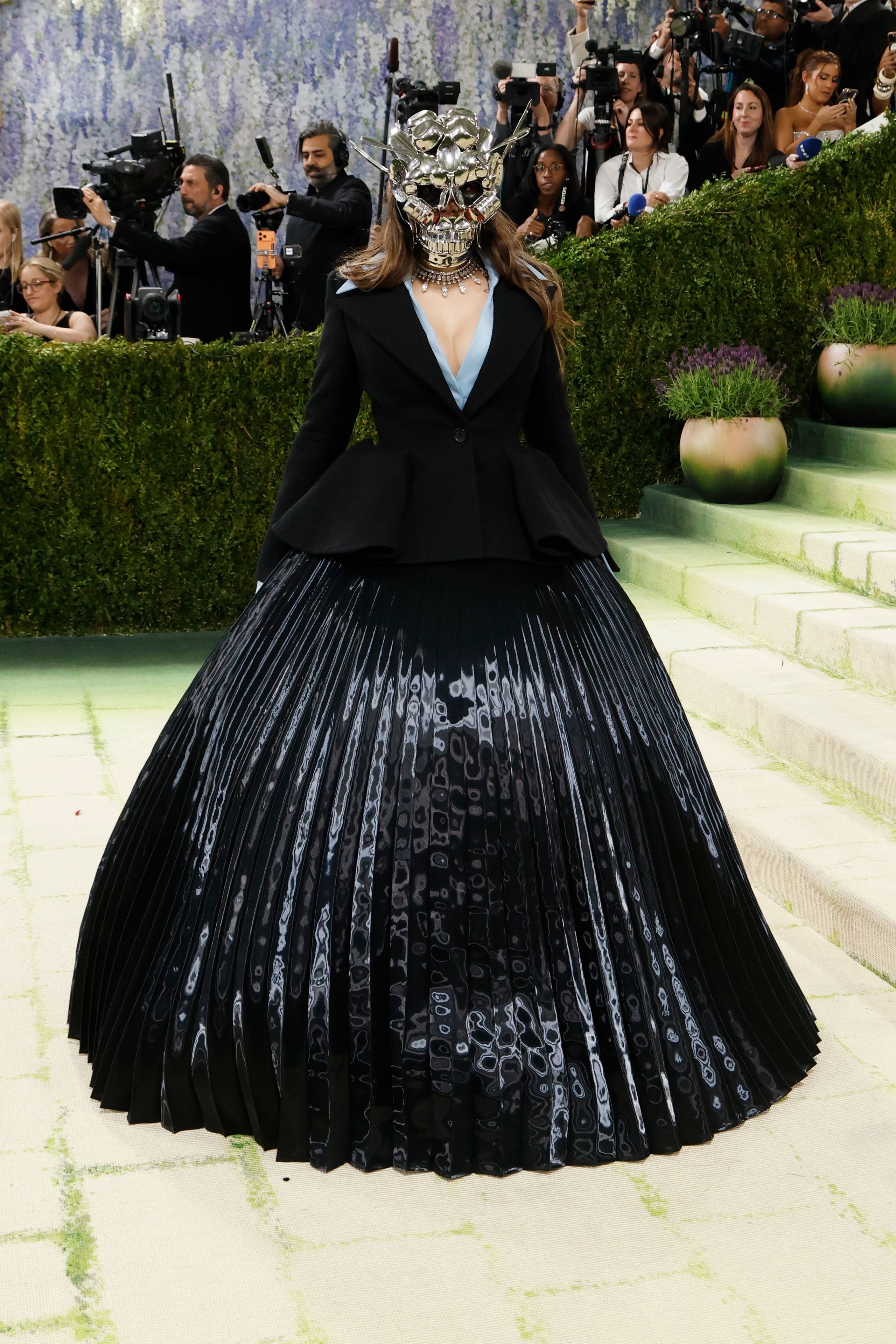
Uhmmm hello?! I loved this look—one of my favourites. Also styled by one of my favourites—Rhea Kapoor. Singer and entrepreneur, Ananya wears custom Robert Wun with a stainless steel and acrylic mask created by Indian artist, Subodh Gupta. The mask may look like a skull, but if you look closer, it’s actually made from traditional Indian kitchen utensils. Gupta is known for taking everyday Indian items and turning them into large sculptures. Stainless steel is reflective of Indian kitchenware.

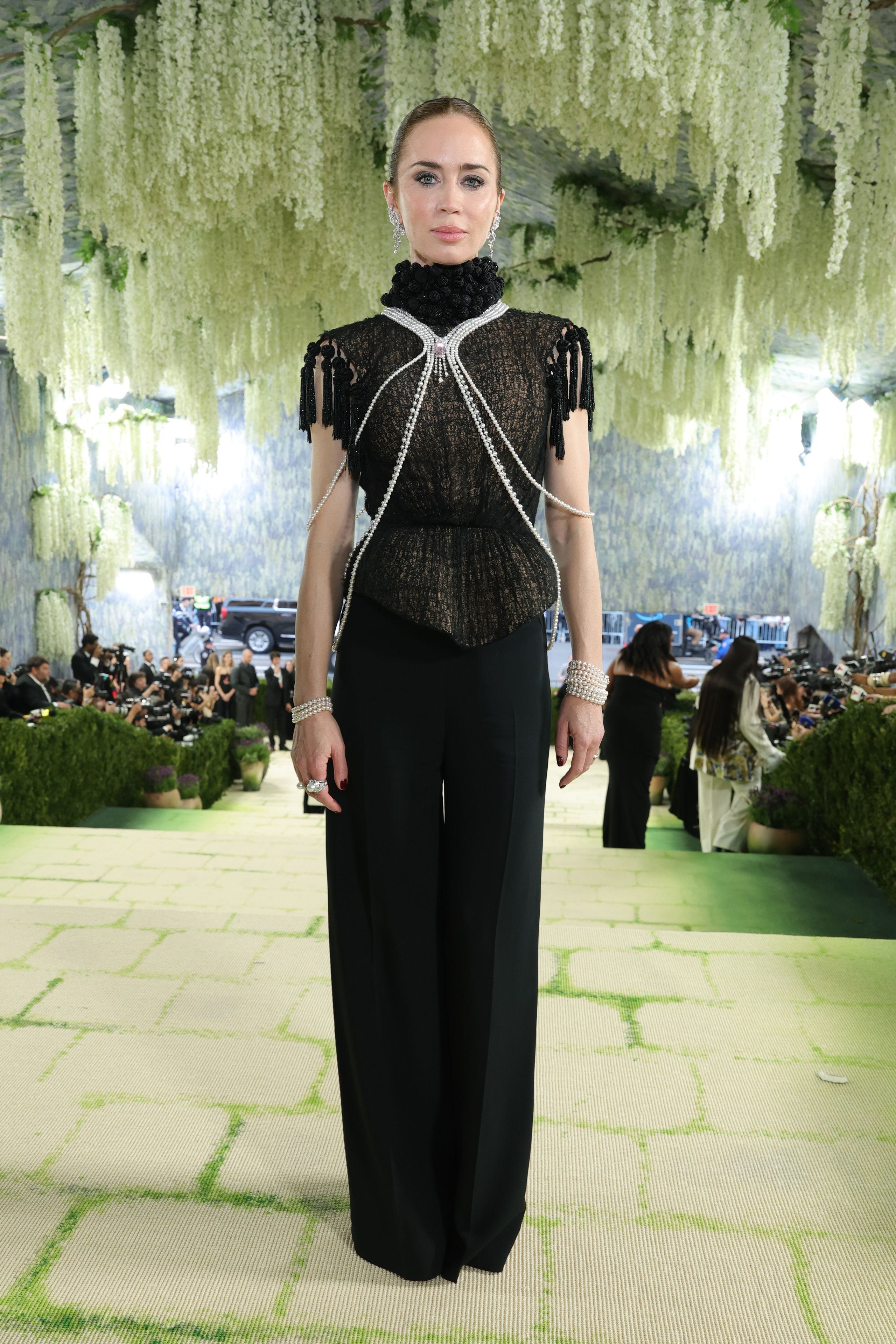
EMILY BLUNT
Wearing Saudi designer, Ashi Studios, bodysuit, with a pearl body necklace by Japanese jeweller Mikimoto, valued at an estimated $500,000.
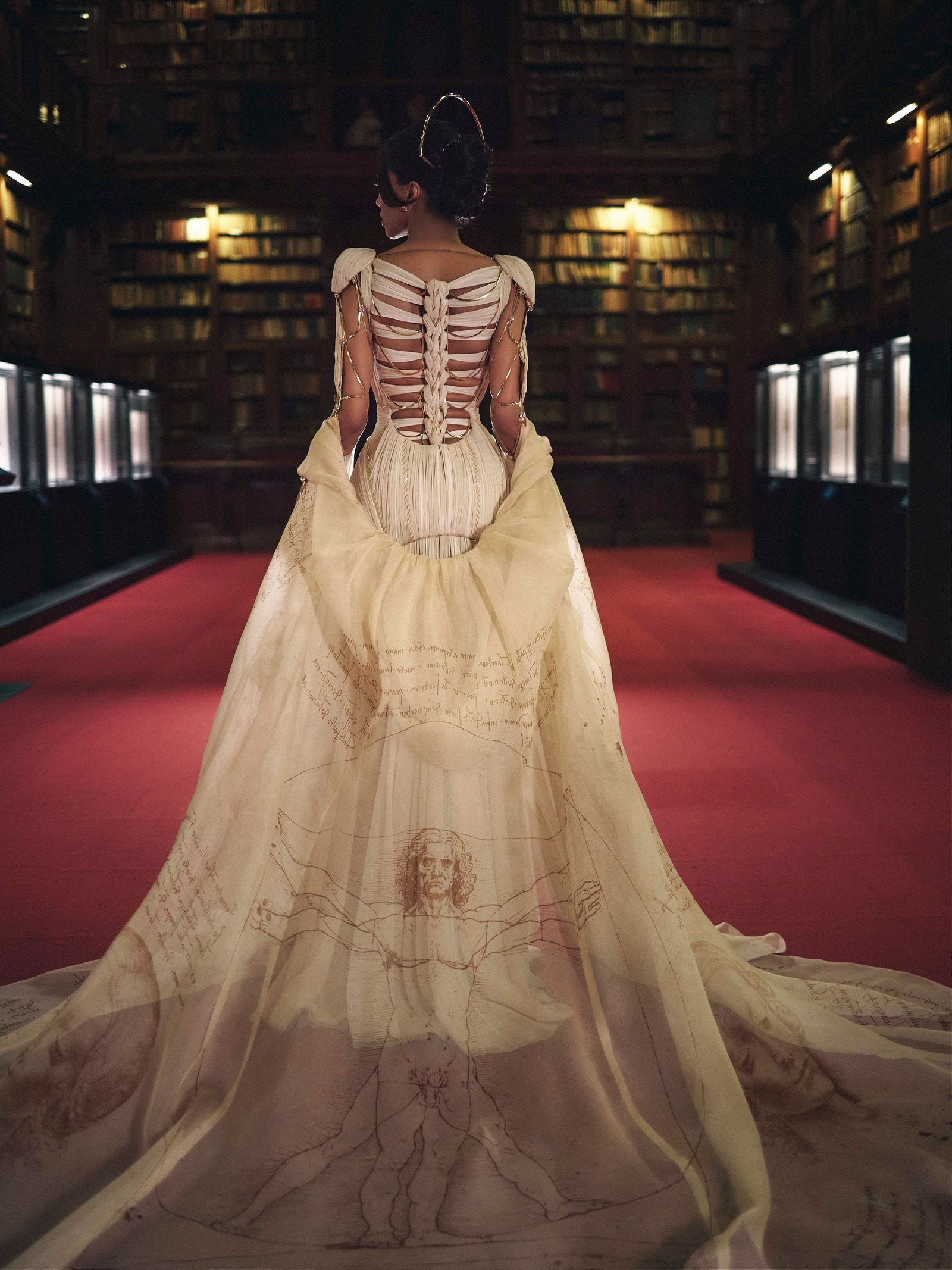
MONA PATEL
Of course, it can’t be a MET Gala highlight without Mona Patel. Inspired by Leonardo da Vinci, Mona wears a Dolce and Gabbana gown.
Absolutely loved this… especially he discussion and perspective of POC x luxury. In the west they often forget that luxury has historically come and been birthed from the global south, Africa and across the UAE and subcontinent. Cartier only became Cartier because of its access to jewels and inspiration from Jeanne Toussaint and her love for what back then was called ‘exotic’ but refers to all the places and spaces I mentioned. There’s still a long way to go of course but these perspectives are so vital - global doesn’t = the west which is finally starting to change. Brilliant article as always!
I love your perspective! And thank you for the pictures and the story behind each look.